Profile
‘When Is This Going to End?’ — A Street That Has Been Living Inside a Murder Inquiry for a Month
On Broad Avenue in Evington, the diggers are still going. The tents are still up. Eight people have been charged and a 60‑year‑old man is still missing. Rakhee Patel reports on what it means to have a murder investigation take root on your doorstep — and refuse to leave.
It is an ordinary residential street. Or at least it was. Wide enough for cars to park on both sides, close to the shops on Francis Street, the kind of road where people know which neighbours leave their bins out too long and which ones always wave on the way to school. Broad Avenue in Evington is not the sort of place you expect to become national news. And yet, for more than a month now, it has been exactly that.
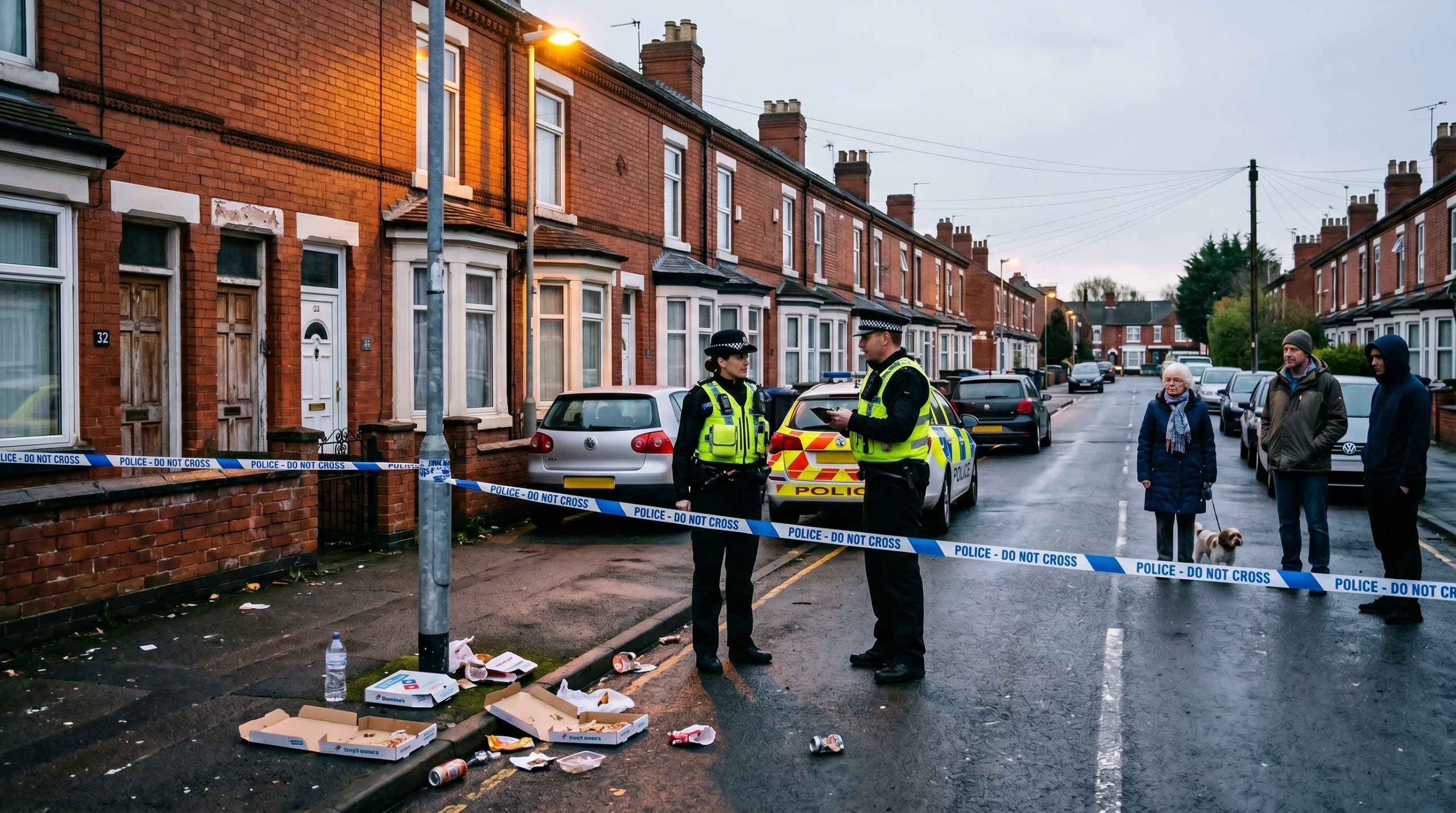
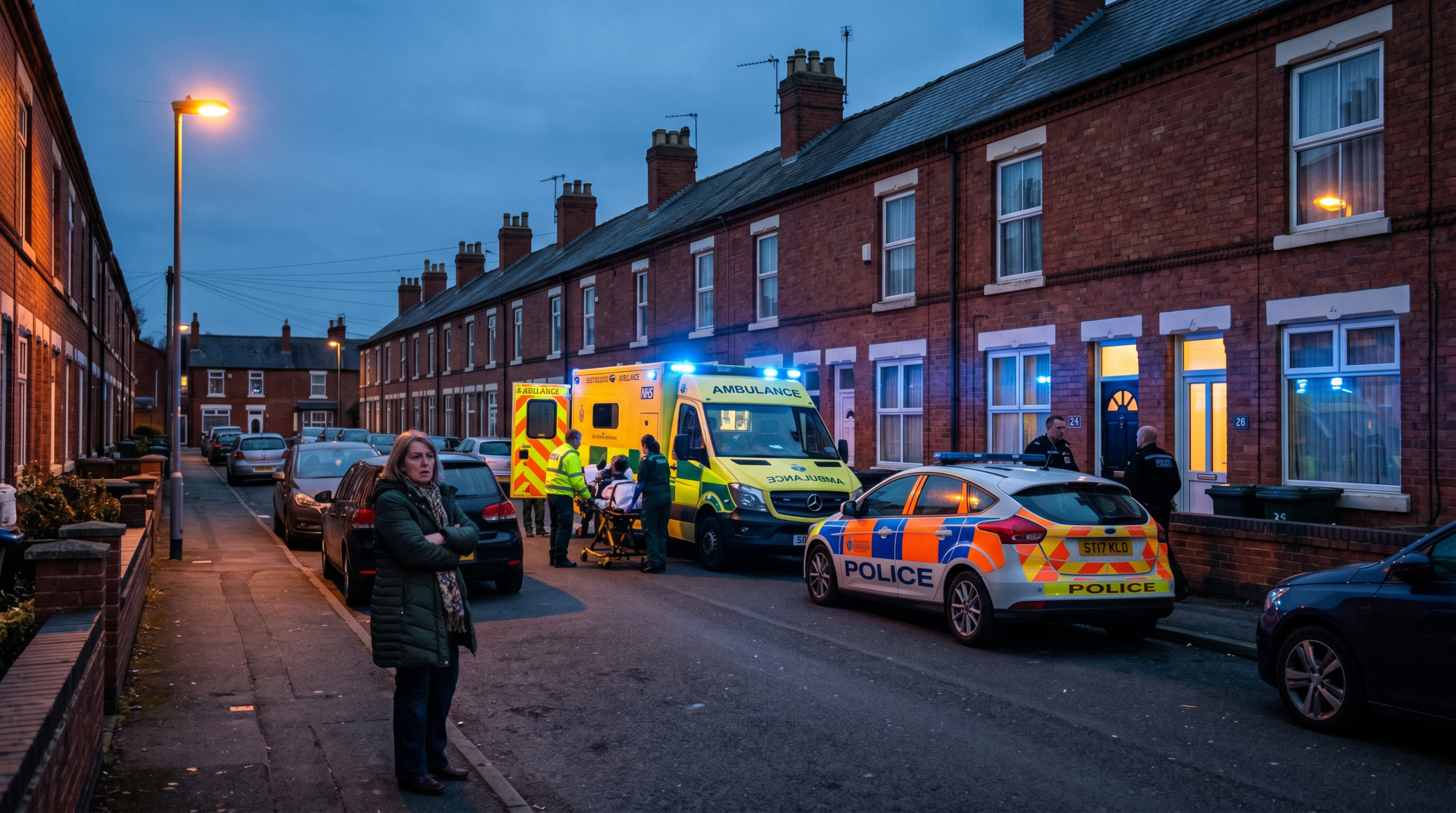
Since the morning of Tuesday, 10 February 2026, Leicestershire Police have been conducting one of the most extensive and prolonged search operations seen in this city in living memory. Six homes sit inside a vast cordon. Large blue tents and white privacy screens have replaced front gardens. A generator hums through the small hours. And somewhere beneath the soil of a semi‑detached house that a 60‑year‑old man once inherited from his parents, police believe they will find evidence of what happened to him — or perhaps more than evidence.
Gary Piatek was last seen alive on 18 April 2024, at a pub. That was nearly two years ago. Nobody who knew him has heard from him since. Police have stated there has been “no proof of life” since that day. For the people who live on Broad Avenue and the neighbouring streets, that phrase — no proof of life — has been hanging in the air since police first arrived, and it is not a comfortable thing to sit with.
The morning it all changed
It started early, the way the most unsettling things always do. Residents drew back their curtains to find tactical support teams, forensic specialists, a cadaver dog, and the kind of heavy police machinery you associate with television dramas, not your street. By midday on that first Tuesday, 12 people had been arrested and officers were already digging.
That was five weeks ago. Today, the excavation has moved from the back garden to the front, and for neighbours like Mohammed, who lives just two doors up, it has stopped feeling like a shock and started feeling like a grim way of life. “It’s the generator for me,” he told our reporter. “They’re leaving it on all night and I’m only two houses up from it. It’s on till like 12.30am, which is too late. We’ve been having to live with it for a whole month and I keep asking around for any updates but I’m getting no information.”
That last sentence is the one that stays with you. I keep asking around for any updates but I’m getting no information. He is two doors away from the heart of a murder investigation and he knows barely more than someone reading about it on their phone in Hinckley or Melton Mowbray.
Scale that even the experts have not seen before
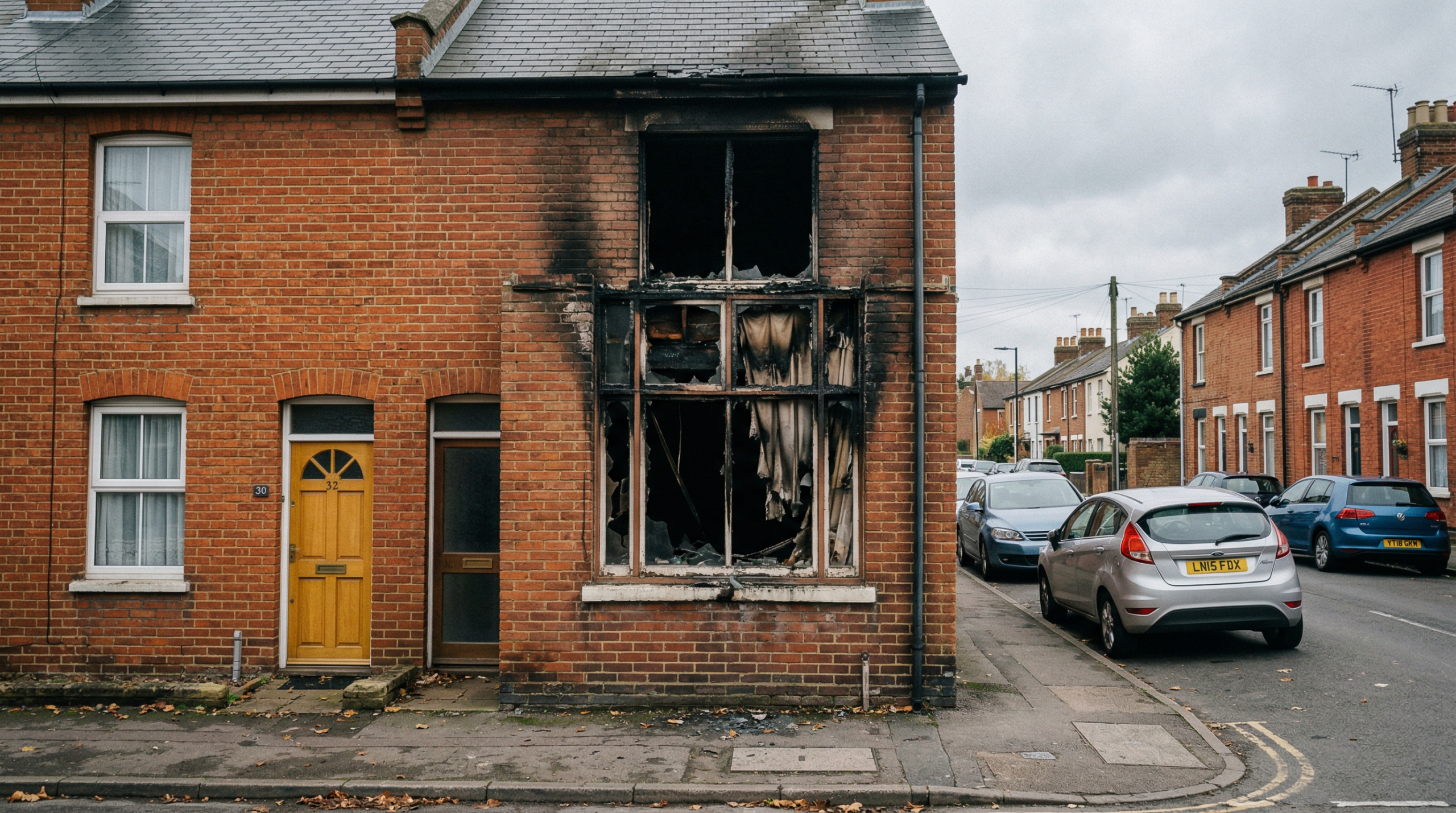
It is not that the police have been idle. Quite the opposite. According to a former officer with more than 30 years’ service and around 200 searches to his name — now a subject lead for policing and criminal investigation at De Montfort University — he has “never encountered” anything like what is happening at Broad Avenue. The roof has been stripped away. Doors removed from their hinges. An extension demolished. Ground‑penetrating radar used to map what lies below the surface before the diggers even move in. More than ten vans have left the site loaded with evidence, and a jackhammer has been heard working inside the building.
The GPR technology alone tells you something about how targeted this operation is. Ground‑penetrating radar works by sending radar pulses into the soil and reading how they bounce back, building a picture of what — or who — might be down there without the need for speculative digging. This is not a team casting about in hope. They know what they are looking for, and they are narrowing down where to find it.
Eight charged — and a trial date in October
Eight people now face charges in connection with Gary Piatek’s disappearance. Two of them — Yosif Ibrahim, 43, of Broad Avenue, and Omed Firuzman, 25, of Ashley Road, Bournemouth — are charged with his murder and are due to stand trial at Leicester Crown Court from October 12. The trial is expected to last up to eight weeks.
The others charged include Diar Muhammedy and Mabast Khalid, who face charges of assisting an offender. Dilan Rabati and Ahmed Nabla, both of Broad Avenue, have pleaded not guilty to acquiring Mr Piatek’s house as criminal property. Dalya Rabati, of Isleworth in London, faces the same charge plus fraud — specifically, that she created a false tenancy agreement for the property. And Nazem Kakamando, of Birmingham, is alleged to have acquired more than £140,000 in cash as criminal property.
What emerges from this list of charges is a picture not just of an alleged murder, but of an alleged network — people accused of systematically stripping away what remained of a man who had already disappeared, right down to the bricks and mortar his parents left him.
A community caught between patience and exhaustion
Sacha Bailey, speaking to our reporter this week, described the latest shift in activity with a complicated kind of relief. “It’s the most action we’ve seen in a while. It’s a relief to see some movement over there,” she said. But then: “The generator is annoying as it was only till 12.30 last night.”
That word “only” is doing a lot of work. After 31 days, the benchmark for what counts as a reasonable night has quietly shifted. 12.30am has become an improvement. That is the slow, grinding toll of living alongside a major inquiry — not one single dramatic moment, but a long accumulation of interrupted sleep, altered routines and unanswered questions.
Leicester woman on trial: The Long Arm of the Gangs
Another resident, driving past the cordon on his way to work each morning, said what many probably feel but few say plainly: “When I drive by to go to work I always think, when is this going to end? Not that I have an issue with it — the police have to do their job — but you do think what is taking them this long to find anything.”
That is an honest and entirely understandable response. It is not a criticism of the police. It is a human being asking a human question: how long must we hold our breath?
What this investigation says about a city
There is something important to sit with here, beyond the forensics and the court dates. Evington is one of Leicester’s most diverse and densely populated neighbourhoods — a community that has, for decades, been getting on with the business of life in all its complicated, layered, brilliantly ordinary detail. The residents on and around Broad Avenue are not passive observers in this story. They are people managing jobs, children, elderly relatives, sleepless nights and the particular unease of not knowing what lies buried literally metres from their front doors.
Police have consistently asked residents not to spread rumour or speculation, and by and large the community has respected that. But information is not just a courtesy here — it is a genuine need. When someone like Mohammed says he has lived two doors from the epicentre of a murder inquiry for a month and has received no information, that is not a small thing. The silence does not protect people. It just leaves them to fill it with their imaginations.
The waiting goes on
As things stand, the search at Broad Avenue will continue for weeks yet — police have been clear about that. The trial, if it proceeds as scheduled, will not begin until October. There will be more mornings of diggers and privacy screens. More nights of generators. More drives past the cordon wondering what progress looks like when it is hidden behind blue canvas.
Gary Piatek was 60 years old when he was last seen walking out of a pub on 18 April 2024. He had no idea, presumably, that the house his parents left him would become the centre of all of this. That somewhere in the ordinary fabric of that ordinary street, something had already been set in motion that would eventually bring in cadaver dogs, jackhammers, ground‑penetrating radar and the full weight of specialist policing — and still be going, nearly two years later.
The people of Broad Avenue will, eventually, get their street back. The tents will come down, the cordon will lift, and the generators will fall silent. But for now they are living inside someone else’s story — and they are doing so, largely, with the kind of quiet, tired decency that communities in this city have always shown when it has mattered most.
Anyone with information about Gary Piatek can contact Leicestershire Police by calling 101, quoting incident number 221 from February 9.