
Profile
Leicester: The City That Never Stops Surprising You
It gets overlooked. It gets underestimated. People drive through it on the M1 and think they know it. They don’t. Rakhee Patel makes the case for a city that has quietly been one of Britain’s most extraordinary places to live, eat, explore and belong.
Let me tell you something about Leicester that most people outside the East Midlands never seem to cotton on to. This city — this brilliant, chaotic, layered, endlessly fascinating city — has been quietly getting on with being remarkable for the best part of two thousand years. While other places spend a fortune marketing themselves as must-visit destinations, Leicester has largely let its record speak for itself. And what a record it is.
I grew up here. I raised my children here. I have watched people arrive in this city from all over the world and never quite manage to leave, because once Leicester gets under your skin, it stays there. There is a reason for that. It is not one thing — it is everything, all at once. It is the smell of a curry on the Golden Mile on a Friday evening and the silence of Bradgate Park on a January morning. It is a Roman wall standing in the middle of a modern city and a football club that, against all logic and probability, once won the Premier League. Leicester does not do things by halves, and it does not do things the way anyone expects.
Two Thousand Years of History Beneath Your Feet
Start at the beginning, because Leicester’s beginning is extraordinary. This is one of the oldest continuously inhabited cities in Britain. The Romans called it Ratae Corieltauvorum and built a thriving settlement here around 160AD — the evidence is still standing, quite literally, in the form of the Jewry Wall, the tallest surviving piece of Roman masonry in Britain. You can walk past it on your way to a coffee shop. You can take your children there on a Saturday morning and watch their faces change when they understand that people were living, bathing, trading and arguing on this very spot nearly two millennia ago.
The newly reimagined Jewry Wall Museum brings all of that to life in a way that feels genuinely thrilling rather than dusty. There are hands-on exhibitions, stories told from the perspectives of real Roman residents, and artefacts that connect the ancient past to the city we live in today. It is the kind of place that makes you proud to be from here — and slightly embarrassed that you have not been more often.
Then there is the matter of King Richard III. In 2012, archaeologists discovered his remains beneath a Leicester car park — a moment so improbable and so perfectly, stubbornly Leicester that it almost defies belief. The King Richard III Visitor Centre on St Martins tells the full story, from Bosworth Battlefield to the burial, through the centuries of forgetting, and on to the painstaking detective work that brought him back to us. The centre has won awards and international recognition, drawing visitors from across the globe to a city they might otherwise never have considered visiting. He now rests in Leicester Cathedral, which stands as one of the most quietly moving spaces in the entire Midlands — a church built on the likely site of a Roman temple, carrying the weight of fifteen centuries of city life within its walls.
A City That Looks Up as Well as Back
History is only one dimension of Leicester. The National Space Centre is another thing entirely — one of the UK’s genuinely world-class visitor attractions, drawing families, students and curious adults with its six themed galleries, the UK’s largest domed planetarium, and a rocket tower that makes you feel, somewhat unexpectedly, rather small and rather amazed simultaneously. It is the sort of place where children who come in reluctantly leave with a new ambition, and where adults rediscover the straightforward wonder of looking up at the night sky and asking what is actually out there.
Leicester Museum and Art Gallery on New Walk offers free entry to all and spans everything from natural history to fine art, from ancient Egypt to contemporary Leicestershire artists. New Walk itself — a Georgian pedestrian promenade that runs from the city centre to the museum — is one of Leicester’s loveliest secrets, tree-lined and unhurried, the kind of street that makes you slow down without being asked to.
The Golden Mile and the Food That Makes This City
Here is something I say to anyone who tells me they have never really explored Leicester: go to the Golden Mile and eat. Just eat. The stretch of Belgrave Road that runs north from the city centre is home to some of the finest South Asian food in Britain — not a bold claim, but a widely acknowledged fact. Gujarati sweets in jewel colours stacked in windows. Dosas arriving at the table the size of your arm. Thalis that make you rethink every lunch you have ever eaten. Restaurants that have been feeding Leicester families for forty years sitting next to newer places doing something entirely their own.
Leicester has one of the most diverse populations of any city in Britain, and that diversity is not a talking point or a marketing slogan — it is simply the texture of daily life here. Communities that have been here for three generations and communities that arrived last year, all contributing to what this city tastes like, sounds like and looks like. The result is a food scene of extraordinary range and quality, from the Golden Mile to the independent restaurants of Clarendon Park, from the Turkish bakeries near the clock tower to the Caribbean takeaways that make a Tuesday evening feel like a celebration.
Diwali, Festivals and a City That Knows How to Celebrate
Every autumn, Leicester hosts one of the largest Diwali celebrations outside India. The lights along the Golden Mile draw hundreds of thousands of people — families arriving from across the Midlands and beyond, the air full of music and food and the particular electricity of a city that genuinely loves what it has become. It is one of those evenings that reminds you why cities matter, why living closely together with people whose lives look different from yours is something to celebrate rather than fear.
But Diwali is only one entry in a calendar that keeps this city alive all year round. Leicester Pride brings colour and defiance and joy to the city centre each summer. The Download Festival, held at Donington Park just on the edge of the county, draws music fans from across Europe. The city’s theatre scene — anchored by the Curve, which has launched productions that have gone on to the West End — punches well above its weight for a city of this size. The De Montfort Hall, one of the country’s great mid-size concert venues, has hosted everyone from classical orchestras to chart-topping artists within its beautiful Edwardian walls.
Green Spaces That Breathe Life Into the City
What often surprises people who have written Leicester off as a grey Midlands city is how green it actually is. Abbey Park — with its miniature railway, its boating lake, its café and the romantic ruins of the twelfth-century Leicester Abbey — sits minutes from the city centre and feels like a deep breath after a busy week. Aylestone Meadows, a Local Nature Reserve in the south of the city, follows the River Soar through flood meadows and ancient hedgerows, a piece of genuine countryside within the city boundary.
And then there is Bradgate Park — 850 acres of bracken-covered open country in Charnwood, just a few miles from the city centre, home to red deer that have wandered there since the medieval period. It is the kind of place that recalibrates you. On a clear morning, standing on the hill above the ruins of the old house where Lady Jane Grey once walked, looking back towards the Leicester skyline, you understand something about this place that is difficult to put into words. It is ancient and modern at once. It is a city that has never stopped layering new things onto old foundations, and the foundations hold.
The Football Club That Defied Everything
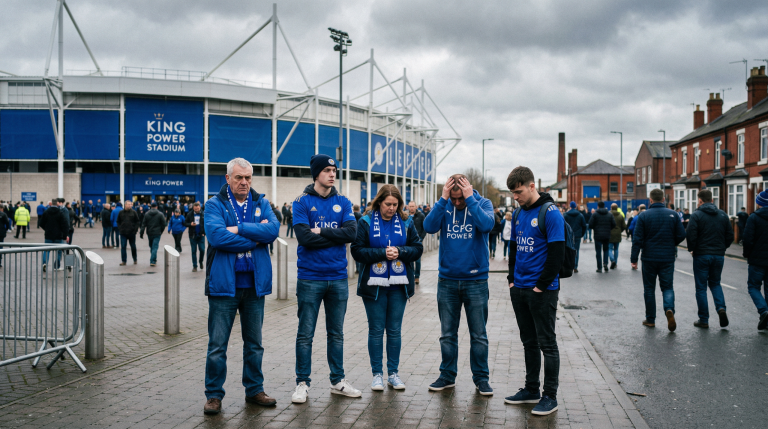
You cannot write about Leicester without writing about the football. In 2016, Leicester City Football Club won the Premier League title at odds of 5,000 to one — the greatest sporting upset in modern times, and one of the most purely joyful stories in the history of the game. For the people of this city, it was not just a trophy. It was confirmation of something they had always known: that Leicester, when it decides to do something, does it in a way nobody sees coming.
The King Power Stadium is a genuine pilgrimage site for football fans from across the world. But for the people who were here during that season — who watched from the terraces, who stood in front of televisions in pubs and living rooms, who wept openly in the street when the title was confirmed — it means something that statistics cannot capture. It means their city, written off by everyone with a typewriter or a microphone, stood up and told the world to pay attention.
Why Leicester Matters
I am, I will admit, not an impartial witness here. This is my city. I grew up watching it absorb everything that was thrown at it — recession, neglect, the slow draining of investment that so many Midlands cities know too well — and come through the other side not diminished, but more itself than ever.[visitbritain]
What strikes me most, when I step back and look at it clearly, is how little Leicester needs to perform. It is not loud about what it is. It does not shout. It has a Roman wall and a medieval king and a space centre and a Michelin-worthy food scene and some of the most spectacular countryside in the East Midlands within twenty minutes of its centre — and it carries all of that with a remarkable absence of fuss.
That is, I think, the most Leicester thing about it. Come and see for yourself. It has been waiting, with characteristic patience, for you to catch up.
Local Independent Business
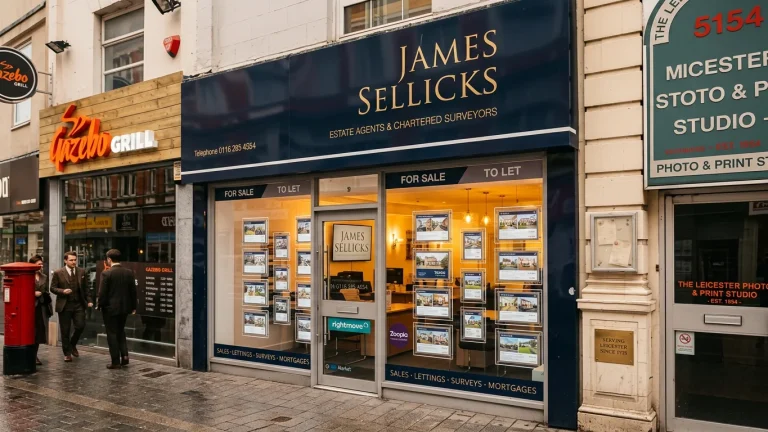

Read more
Local Attractions

Map
Sorry, no records were found. Please adjust your search criteria and try again.
Sorry, unable to load the Maps API.